
- You cannot add another "BDSM/Kink & Consensual Non-Monogamy Competency Training(4 CE Hours)" to your cart. View cart
(C. Theory & Methods ), E. Intimacy skills, Online Workshops, Weekend Workshop - WPB 01/20, Weekend Workshops, Workshops
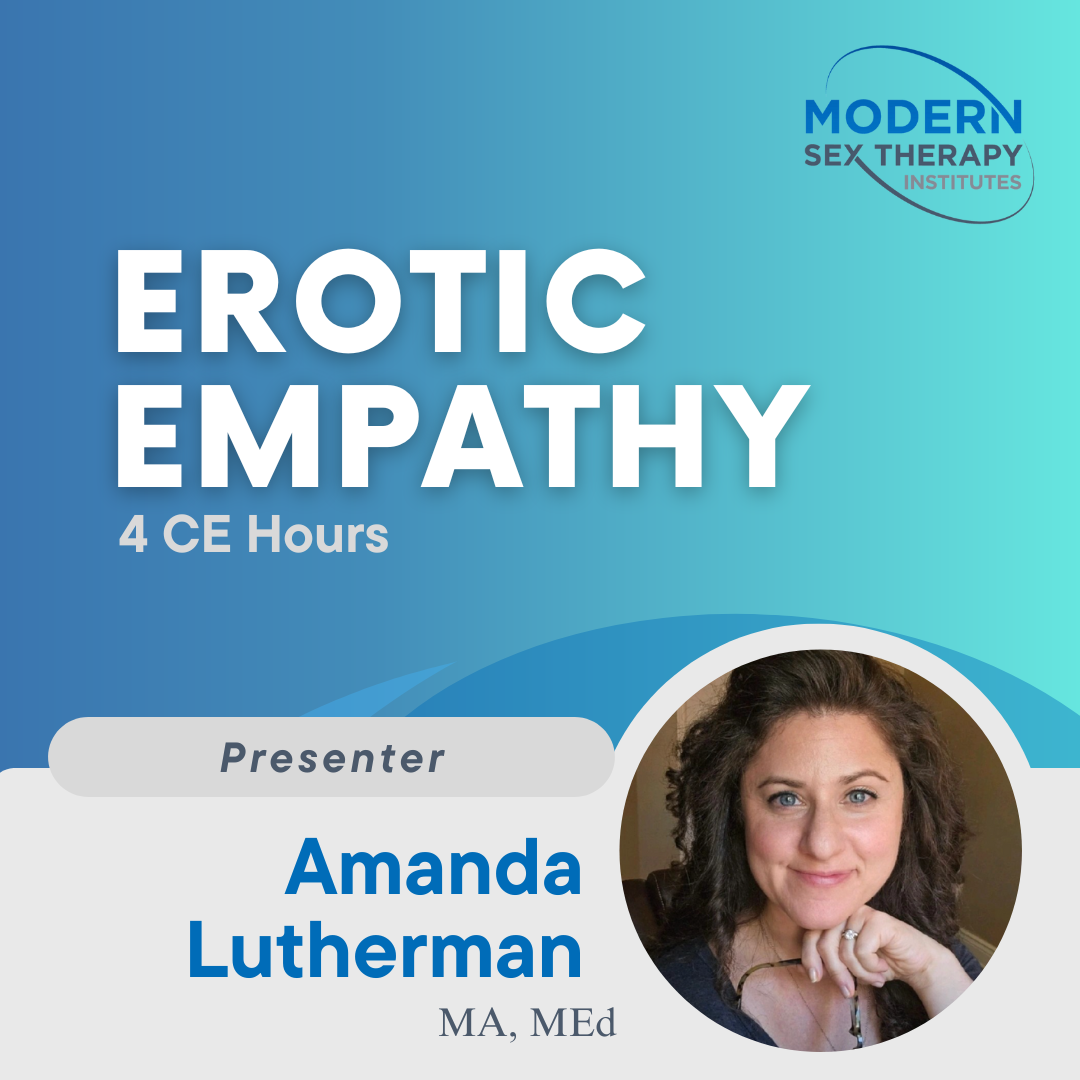
Erotic Empathy® – An Introduction (4 CE Hours)
$160.00
4 CE Hours
Presented by: Amanda Luterman, M.A. M.Ed.
Recorded workshop available via video on demand
AASECT Category:
Human Sexuality Education
Section E
AND
Sex Therapy Education
Section C
Mental health practitioners specializing in sex therapy require competence in identifying and treating erotic concerns or erotic empathy. This introductory workshop will present the principles of Erotic Empathy, and foster the creation of individual practitioner schemas for use in clinical practice. Topics and activities will include:
- an introduction to Erotic Empathy
- a sample protocol for practical application
- experiential sessions designed to embody the roles of both practitioner and client
Objective: Practitioners will synthesize and apply the principles of Erotic Empathy for their own clinical practice. After this workshop, you will be able to:
- Explain Erotic Empathy (its components, creation and evolution) (1hr)
- Describe the Relationship Shared Values Primer (RSVP) as applicable to cases of erotic disconnection in couples with a history of sexual trauma; a sample protocol for practical application (1hr)
- Demonstrate the fictional application, and embodiment of, the roles of both practitioner and client using EE (1hr)
- Assess their own comfort with concerns of an erotic identity following the introduction to EE and reflect on what’s next (1hr)
| Select One: | Attend In-Person, Attend Live Online |
|---|
Related products
-

Integrating Kink with Harm Reduction and other Therapeutic Modalities(2 CE Hours)Presenter:Michael Aaron Ph.D.
$80.00 -
Understanding Non-Monogamy(2 CE Hours)Presenter:Zhana Vrangalova, Ph.D.
$80.00 -
Treatment of Sexual Offending Behaviors Presenter:Danielle Besaw, M.A.
$160.00 -
BDSM/Kink & Consensual Non-Monogamy Competency Training(4 CE Hours)
$160.00