
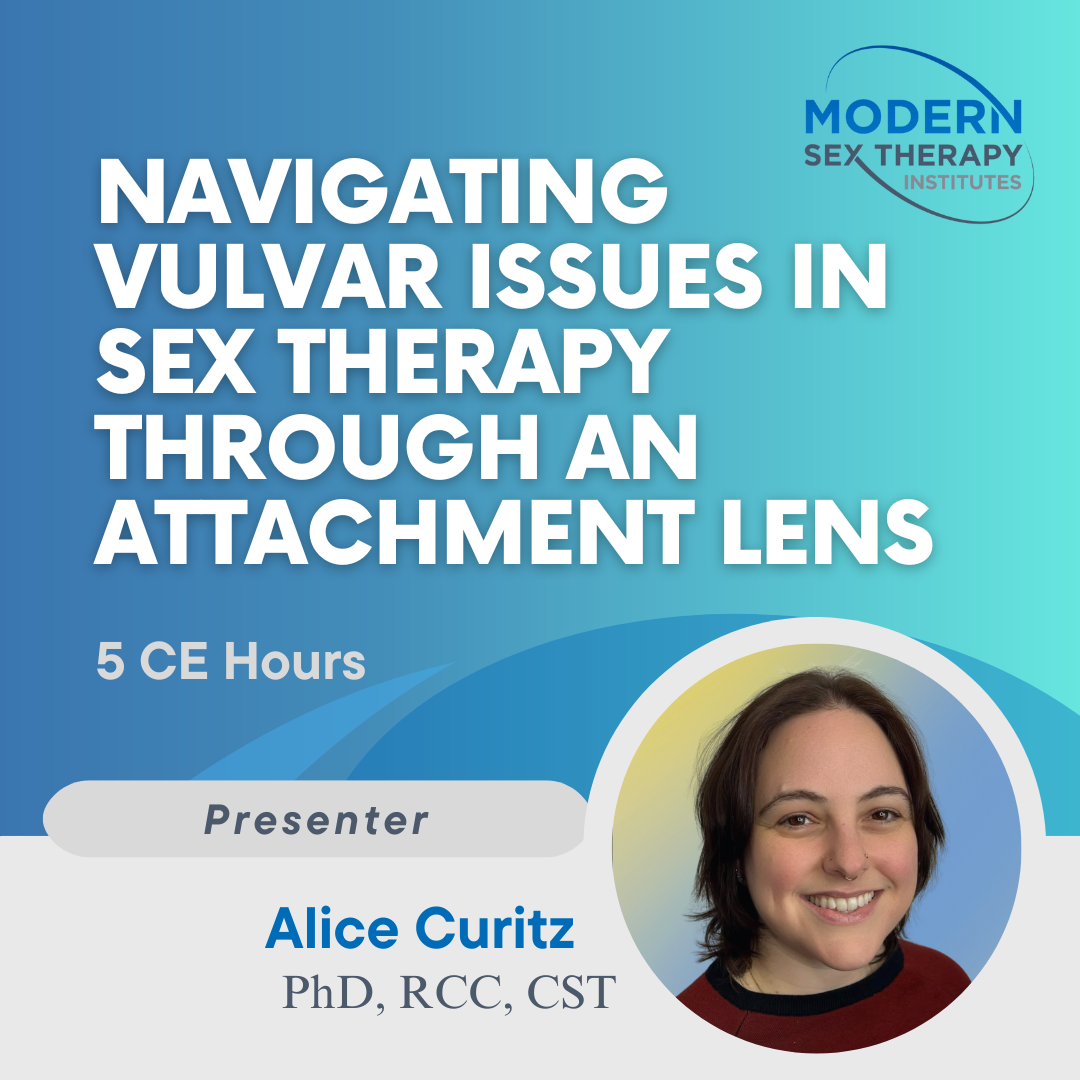
Navigating Vulvar Issues in Sex Therapy through an Attachment Lens (5 CE Hours)
$200.00
Presented by: Alice Curitz, PhD, CCC, RCC
5 CE Hours
Distance Learning – Recorded workshop available via video on demand
AASECT Category: Sex Therapy, Section D.
Description
Navigating Vulvar Issues in Sex Therapy through an Attachment Lens explores evidence-based approaches in attachment theory to supporting clients with vulvar and vaginal issues throughout the lifespan. This 5-hour training emphasizes a nonpathological and inclusive approach to attachment theory and applies the lens to diverse vulva owners in both individual and relationship therapy settings. Not only will you learn to further approach cases from an attachment lens, you’ll also develop a deeper understanding of how your own attachment styles can impact the work you do and the therapeutic relationships you develop with your clients. We’ll discuss repairing attachment and relational ruptures in the sex therapy space. You will learn about vulvar and vaginal development and changes throughout the lifespan, as well as understanding common vulvar and vaginal complaints and issues in sex therapy. Lastly, we’ll explore some case studies together to bring the theory to life.
Learning Objectives
At the conclusion of this workshop, participants will be able to:
- Develop a non-pathologizing understanding of Attachment Theory
- Understand Attachment Theory through a Queer Lens
- Apply attachment theory to working with vulvar and vaginal issues in sex therapy
- Deepen understanding of symptoms and etymologies of common vulvar and vaginal issues
- Map vulvar and vaginal anatomy and development throughout the lifespan
- Learn to take a sexual history through an attachment lens
- Improve approach to supporting partners of people with genito-pelvic pain through an attachment lens
- Enhance and develop somatic approaches to consent and embodiment
- Create treatment plans for clients presenting with a variety of attachment styles and vulvar issues
Activity Schedule
- Attachment Theory
- Vulvar and Vaginal Issues in Sex Therapy
- Using an Attachment Lens in Therapy
- Case Study
Speaker Bio
Dr. Alice Curitz (she/they) is a Certified Sex Therapist and the founder of Our Landing Place, an online queer-centred therapy clinic providing affirming and competent mental health care to the 2SLGBTQIA+ community across the parts of Turtle Island referred to as Canada. She specializes in queer sex and relationship counselling, and provides training and clinical supervision services to mental health clinicians, as well as consulting with the government and other organizations to ensure their services are meeting the needs of their queer and trans community members. Alice takes an intersectional, anti-oppressive, anti-racist and feminist lens to their work. They are a Registered Clinical Counsellor, Canadian Certified Counsellor, Registered Counselling Therapist, and Certified Sex Therapist with a Masters in Counselling Psychology and a PhD in Clinical Sexology.
Class originally recorded: 11/23/2025.
Social workers completing this course receive 5 clinical continuing education credits.