
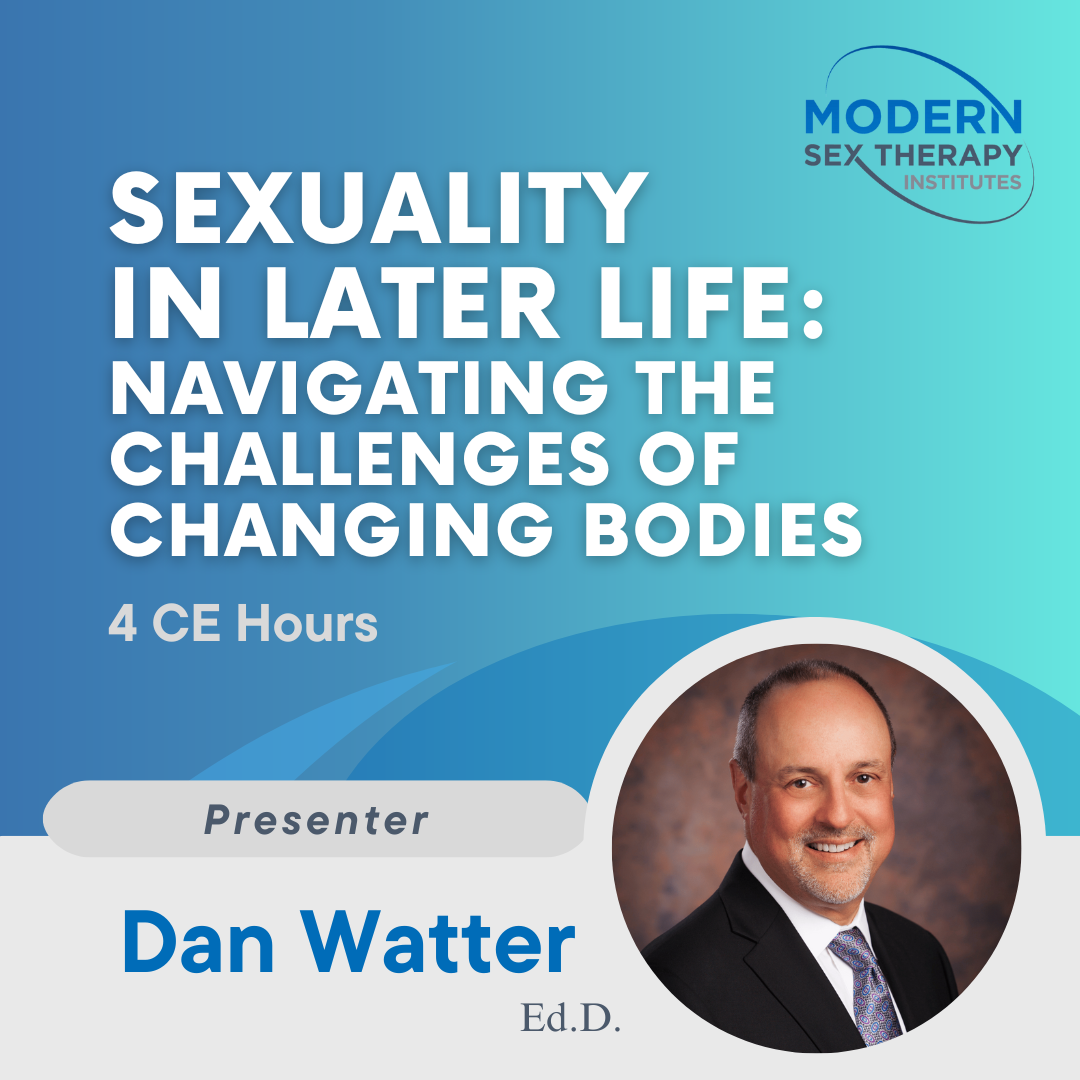
Sexuality in Later Life: Navigating the Challenges of Changing Bodies (4 CEs)
$160.00
Presented by: Dan Watter, Ed.D.
4 CE Hours
Saturday, March 14, 2026 | 9AM – 1PM EST
Live via Webinar (Zoom) or Available on demand via recording
AASECT Category: Human Sexuality Education, Section B
Description:
As people are living longer, concerns about quality of life have taken on an increasingly prominent place in the lives of our patients. One of the most frequently expressed concerns/frustrations with aging is how to manage the sexual changes that naturally occur in an aging body. Such concerns have implications for both levels of self-esteem and relationship/intimacy maintenance and enhancement. This presentation will address the myriad sexual dilemmas facing our aging patients, as well as suggest strategies the practicing psychologist can employ when working with such patients.
Learning Objectives:
At the end of this webinar, participants will be able to:
- Identify the sexual concerns common to aging psychotherapy patients
- Apply treatment strategies based on an existential-humanistic treatment model
- Analyze the ethical conflicts presented in our current focus of treatment for this population
- Critique current methods of treatment, both medical and psychological
Activity Schedule:
15 minutes: Introduction and Overview
45 minutes: Aging and Sexuality
1 hour: Existential Sex Therapy
1 hour and 30 min: Case Studies and Treatment Strategies
30 minutes: Conclusions, Take-Away Messages, and Wrap-Up
Speaker Bio:
Dr. Daniel N. Watter received his doctoral degree from New York University in 1985 and has also earned a post-graduate certificate in Medical Humanities from Drew University. He is licensed as both a psychologist and a marital and family therapist. In addition, he is Board Certified in Sex Therapy by the American Association of Sexuality Educators, Counselors, and Therapists (AASECT), and the American Board of Sexology (ACS), of which is also holds Fellowship status. Dr. Watter is an AASECT certified sex therapy supervisor and has been elected to Fellowship Status in the International Society for the Study of Women’s Sexual Health (ISSWSH), as well as the Sexual Medicine Society of North America (SMSNA).
Related products
-
“Do You Have a Clitoris?” And Other Questions Not to Ask an FGM/C Survivor
$80.00 -
Normative Sexual Development and Behavior(4 CE Hours)Presenter:Melinda Gronen, LCSW
$160.00 -
Designing Open Relationships (2 CE Hours)
$80.00 -
Millennials, High Achievers and Sex(2 CE Hours)Presenter:Constance Quinn, LCSW
$80.00