
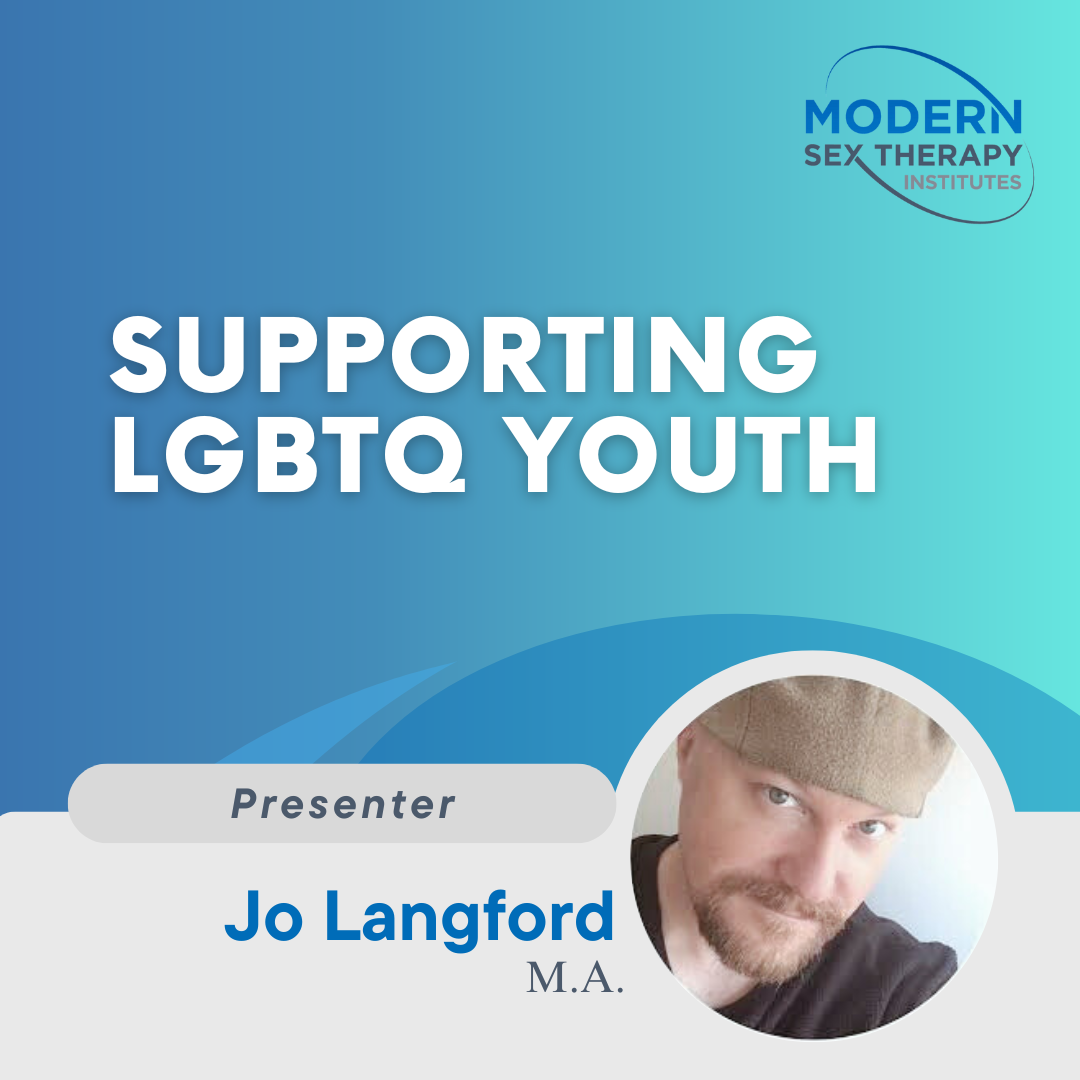
Supporting LGBTQ Youth Presenter: Jo Langford, M.A.
$80.00
Description
Counseling and sex education should address the full range of behaviors that teens engage in—whether gay or straight. This concept becomes increasingly important for queer youth, who are particularly uninformed and alienated by mainstream sex education classes.
Despite our skills and best intentions, many therapists find themselves uncomfortable and/or uninformed when it comes to addressing the unique needs of non-straight clients. It is our responsibility to appropriately identify, treat and educate the not-straight youth in our offices.
Learning objectives
- Discuss current terminology and lingo relevant to queer/ youth culture.
- Explain some of the unique dynamics in therapeutically serving queer populations (specifically in terms of rapport and sexual education).
- Describe guidelines for best practices when serving this population.
Once you’ve gotten to the point at which your child’s “queerness” can be talked about between you, you will each feel fear, apprehension, awkwardness and other flavors of angst – but there will also be relief, solace and a sense of bonding between you as well.
But processing a child’s definitive statement of their alternative sexuality or gender is only the beginning of the journey as a parent. Some freak out a little, some are totally fine with it), some accept it, some struggle – but they all still have to parent them.
Learning objectives:
- Describe the concepts of spectrum and sex and gender development.
- Explain Gender Dysphoria and transition– a primer on trans children and the impact on the family.
- Discuss 2 essential components of best practices for helping parents create safe spaces and identify and utilize resources.
- Discuss parenting challenges, common presenting problems and self-care for LGBTQ caregivers.
Speaker Bio:
Jo Langford is a therapist, sex educator and dad in Seattle. More about his work with youth, parents and professionals to promote healthy, positive and safe sexual and social behavior can be found at his website.
Related products
-
Diagnosis & Risk Assessment of Sexual Offending Behaviors Presenter:Jeannie Brooks, Ph.D.
$320.00 -

Desire Discordance (2 CE Hours) Presenter: Michael Aaron, Ph.D.
$80.00 -
Medical Factors Related to Sexuality and Sexual Functioning(8 CE Hours)
$320.00 -
Professional Communication & Personal Reflection Skills(3 CE Hours)Presenter:Richard Siegel, Ph.D.
$120.00