
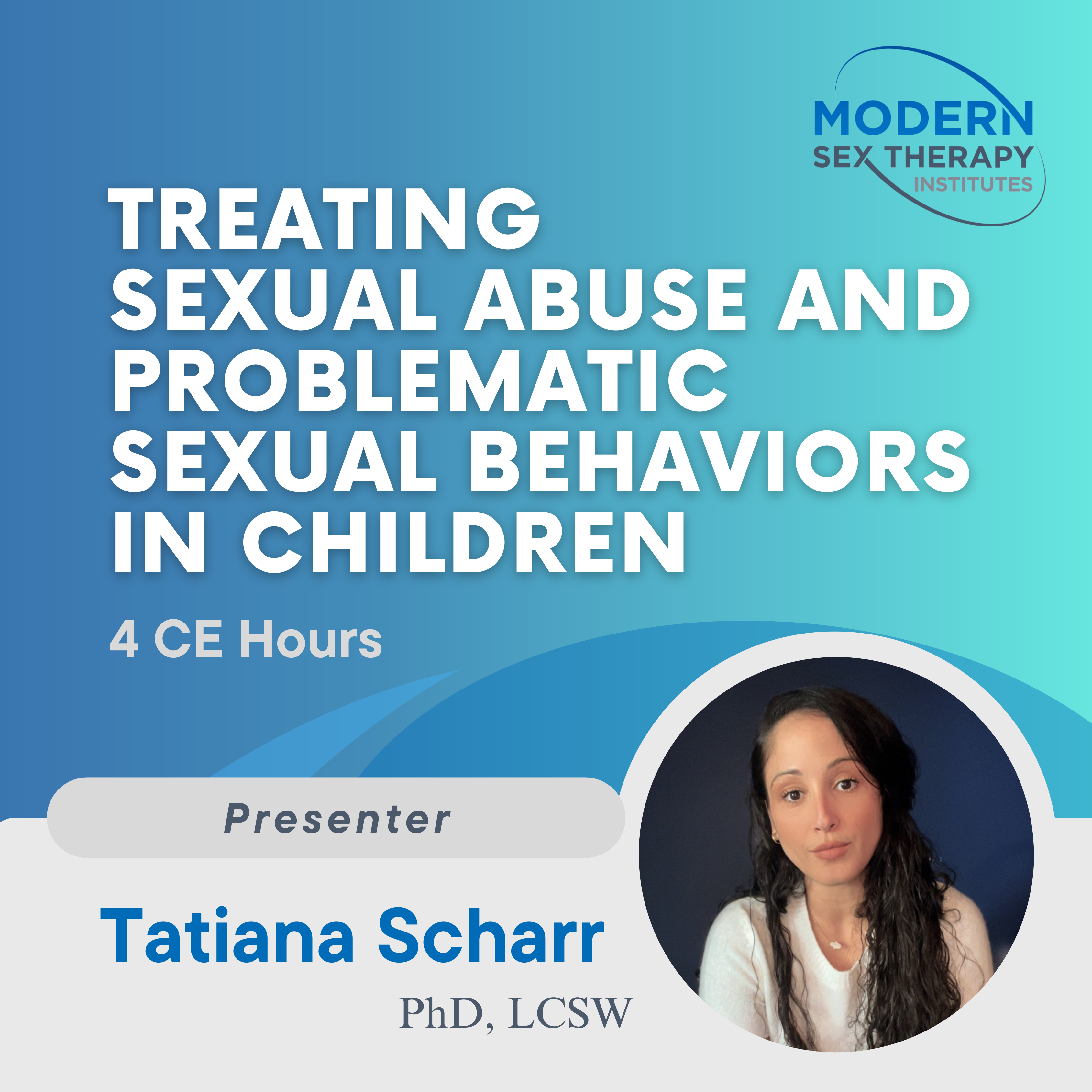
Treating Sexual Abuse and Problematic Sexual Behaviors in Children (4 CE Hours)
$160.00
Presented by: Tatiana Scharr, Ph.D., LCSW
4 CE Hours
Available on demand via recording
AASECT Category: Human Sexuality Education, Section J
Decription
This course provides mental health professionals with a comprehensive framework for understanding and treating children who have experienced sexual abuse and those who exhibit problematic sexual behaviors (PSB). Participants will explore the common emotional, behavioral, and cognitive symptoms resulting from sexual abuse and learn evidence-based treatment approaches, including Trauma-Focused Cognitive Behavioral Therapy (TF-CBT). The course will also focus on identifying and assessing problematic sexual behaviors in children, differentiating developmentally appropriate behaviors from concerning ones, and implementing effective intervention strategies using Problematic Sexual Behavior Cognitive Behavioral Therapy (PSB-CBT). Through case studies, discussion, and practical application, participants will gain the skills necessary to provide trauma-informed, developmentally appropriate care.
Learning Objectives
- Describe how to assess common symptoms in children who have experienced sexual abuse, including emotional, behavioral, and cognitive manifestations.
- Explain how to Apply Trauma-Focused Cognitive Behavioral Therapy (TF-CBT) techniques to help children process their trauma and develop healthy coping mechanisms.
- Discuss how to Differentiate between typical sexual development and problematic sexual behaviors (PSB) in children and understand the risk factors and contributing factors associated with PSB.
- Explain how to Implement Problematic Sexual Behavior Cognitive Behavioral Therapy (PSB-CBT) interventions to treat children with PSB while addressing underlying trauma, emotional regulation, and social skills.
Activity Schedule
Hour 1: Understanding Sexual Abuse in Children
1.1 Defining Childhood Sexual Abuse
- Definition and scope of childhood sexual abuse
- Prevalence and statistics
- Common myths and misconceptions
- Reference: Handbook of Child Sexual Abuse by Paris Goodyear-Brown
1.2 Impact of Sexual Abuse on Children
- Emotional, cognitive, and behavioral consequences (Post-Traumatic Stress, Anxiety,
- Depression)
- Symptoms in different developmental stages
- Reference: The Impacts of TF-CBT for Child and Adolescent Survivors of Sexual Abuse by Melissa Leap
1.3 Parental Reactions and Support
- Common reactions from non-offending caregivers (denial, guilt, anger, fear)
- How to provide trauma-informed support for parents
- Case study discussion: Parental response scenarios
Hour 2: Trauma-Focused Cognitive Behavioral Therapy (TF-CBT)
2.1 Overview of TF-CBT
- What is TF-CBT?
- Key components and phases (Stabilization, Trauma Narrative, Integration)
- How TF-CBT addresses emotional dysregulation and cognitive distortions
2.2 Application of TF-CBT for Sexual Abuse Survivors
- Evidence-based efficacy of TF-CBT in reducing PTSD and trauma-related symptoms
- Case study analysis: Treatment planning using TF-CBT
2.3 Addressing Parent-Child Relationship in TF-CBT
- The role of joint parent-child sessions in healing
- Parent psychoeducation and coping strategies
Hour 3: Identifying and Assessing Problematic Sexual Behaviors (PSB)
3.1 Understanding Sexual Development in Children
- Typical vs. Atypical sexual behaviors in childhood
- Factors influencing sexual behavior in children (media, trauma, environment)
- When to be concerned: Signs of problematic sexual behaviors
3.2 Assessment Strategies
- How to conduct a PSB assessment
- Key questions to differentiate normal exploration from problematic behaviors
- Tools and frameworks for assessment
3.3 Understanding Family and Social Context
- The impact of trauma exposure on PSB development
- Engaging caregivers in the assessment and treatment process
- Ethical and legal considerations in working with children displaying PSB
Hour 4: Problematic Sexual Behavior Cognitive Behavioral Therapy (PSB-CBT)
4.1 Introduction to PSB-CBT
- Overview and evidence base
- Comparison to TF-CBT: Key similarities and differences
- How PSB-CBT works with young children
4.2 Implementing PSB-CBT Interventions
- Managing safety planning and boundary setting
- Addressing cognitive distortions related to sexuality and relationships
- Behavioral interventions for impulse control
4.3 Case Studies & Discussion
- Case study review: Application of PSB-CBT strategies
- Group discussion: Challenges in treatment implementation
- Q&A session
Closing Remarks
- Summary of key takeaways
- Resources for further reading
- Final Q&A
Speaker Bios
Dr. Tatiana Scharr is a Dominican-American therapist, educator, and researcher specializing in sexual trauma, sexual dysfunctions, and anxiety. With a Ph.D. in Clinical Sexology and certification as an AASECT Certified Sex Therapist, she brings over seven years of expertise to her work. Dr. Scharr’s research focuses on how cultural dynamics, including machismo, marianismo, and biculturalism, shape sexual attitudes and behaviors within Hispanic communities. As a clinician and educator, she is dedicated to fostering culturally competent discussions around Hispanic sexuality and creating inclusive spaces for learning and growth.
Class originally recorded: 2/22/2026.
Social workers completing this course receive 4 clinical continuing education credits.