
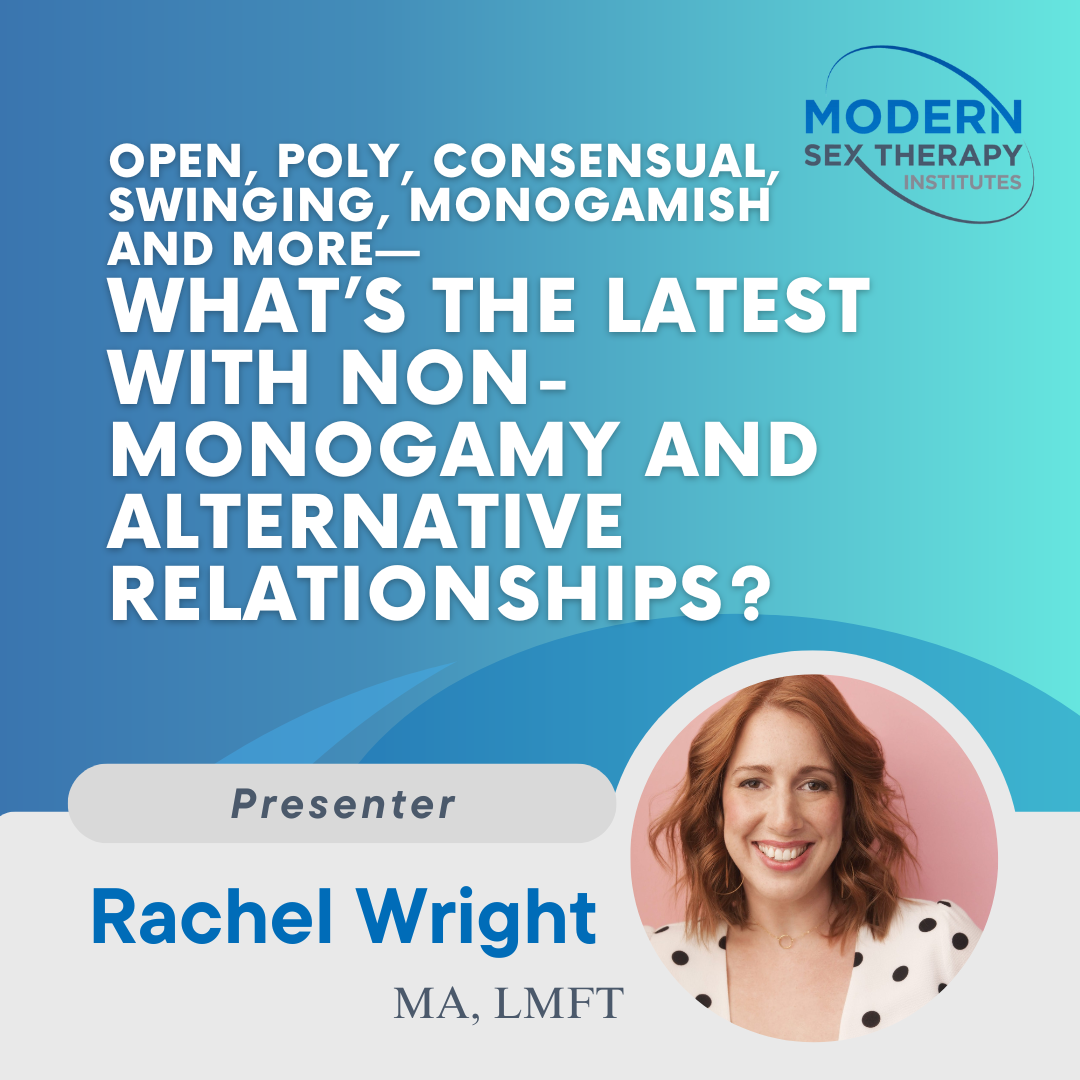
Open, poly, consensual, swinging, monogamish and more—what’s the latest with non-monogamy and alternative relationships?
$0.00
Wednesday May 17, at 6:00pm EST
Presenters: Rachel Wright, Jordyn Taylor, Summer Mattice, David Burnstein
Live via Zoom
No CEs will be offered for this webinar
Description:
In this webinar, you will learn from the best and brightest thought leaders on this topic, including Rachel Wright, psychotherapist and modern relationship expert, Jordyn Taylor, Executive Digital Editor at Men’s Health, and Summer Mattice and David Burnstein, Co-Founders of Open Social, a private community providing support for anyone who is open or curious about the best way to step into this exciting way of relating. Rachel, Jordyn, Summer, and David each offer their professional and personal insights surrounding contemporary relationships and trends in nonmonogamy, including firsthand knowledge of what works and what doesn’t. Join this vulnerable, intriguing, and of course, open conversation to get your most pressing questions answered. This will be an informative and lively discussion on one of the fastest growing areas of sex and relationship therapy.
Learning Objective: Describe 2 different types of non-monogamy
Related products
-
Millennials, High Achievers and Sex(2 CE Hours)Presenter:Constance Quinn, LCSW
$80.00 -

Desire Discordance (2 CE Hours) Presenter: Michael Aaron, Ph.D.
$80.00 -

Specific Clinical Issues with Polyamorous & Non-Monogomous Relationships(2 CE Hours)Presenter:Margie Nichols, Ph.D.
$80.00 -
BDSM/Kink & Consensual Non-Monogamy Competency Training(4 CE Hours)
$160.00