
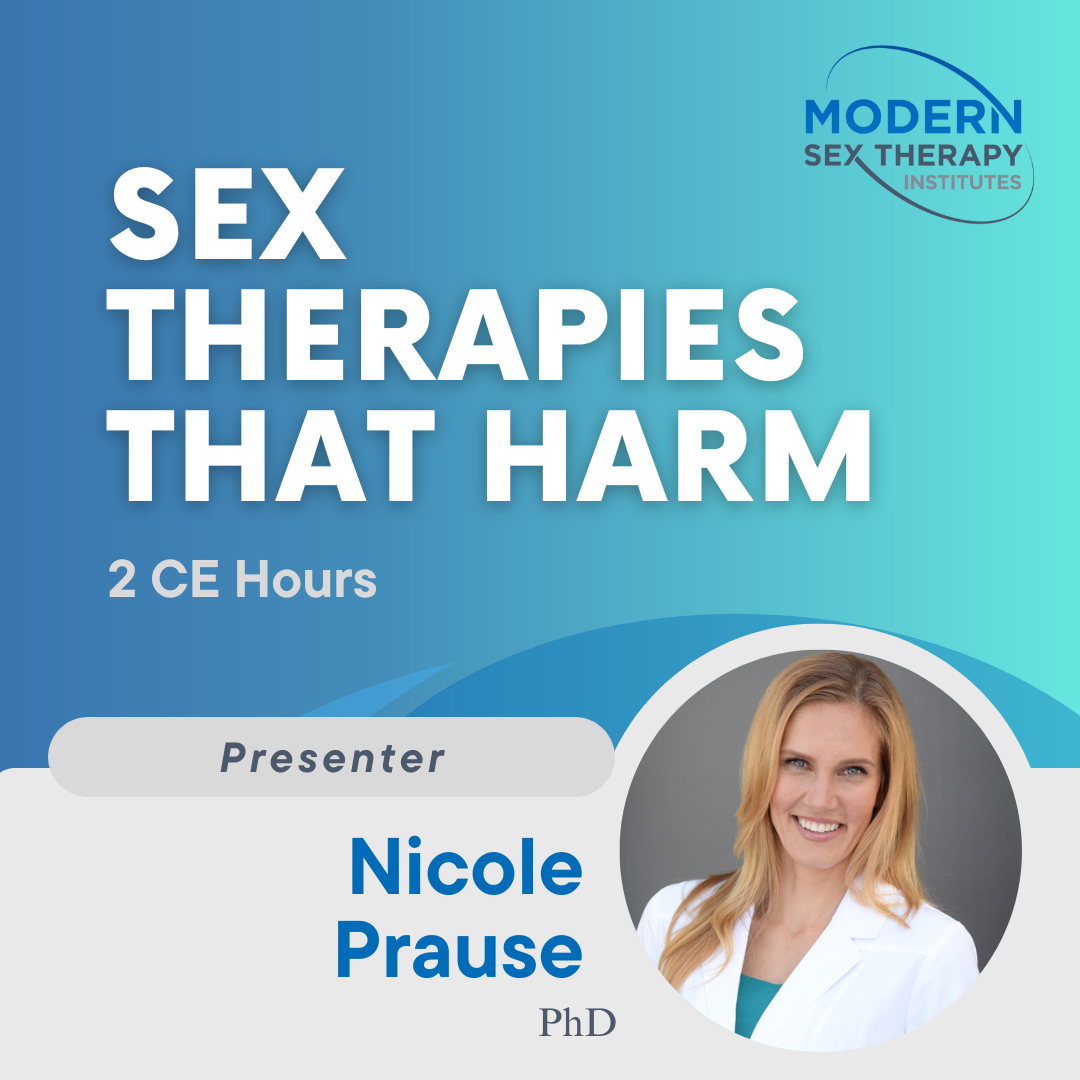
Sex Therapies That Harm
$80.00
2 CE Hours
Presented by: Nikki Prause, Ph.D.
Recorded workshop available via video on demand
AASECT Category:
Sex Therapy Education
Section A
AND
Section F
Several therapies are now demonstrated to harm clients. Beyond knowing therapies to avoid, we review how these iatrogenic effects were identified and the nature of the harm. Three specific harmful therapies are reviewed: anti-gay conversion therapy, porn addiction Reboot/NoFap therapy, and critical incident stress debriefing. Assessments for tracking clients to avoid harm in practice and with novel therapies are reviewed.
Learning objectives
- Describe three therapies that are considered harmful and why.
- Discuss alternatives to the harmful therapies.
- Create a plan to monitor for harm in therapy clients.
Activity Schedule:
Hour 1: Review the three therapies
Hour 2: Identifying harm in your own clients
Speaker bio:
Speaker Bio:
Nicole Prause, PhD is an American neuroscientist researching human sexual behavior, addiction, and the physiology of sexual response. She is a statistician in the Department of Medicine at UCLA, and founded the independent research laboratory Liberos LLC. https://www.liberoscenter.com
Dr. Prause is faculty and the Supervisor of Dissertation at Modern Sex Therapy Institutes.
Related products
-
Treatment of Sexual Offending Behaviors Presenter:Danielle Besaw, M.A.
$160.00 -
Eating Disorders, Sexual Health and FertilityPresenter:Constance Quinn, LCSW
$80.00 -
Understanding Non-Monogamy(2 CE Hours)Presenter:Zhana Vrangalova, Ph.D.
$80.00 -
Gender, Orientation, and Identity Issues(8 CE Hours)
$320.00