
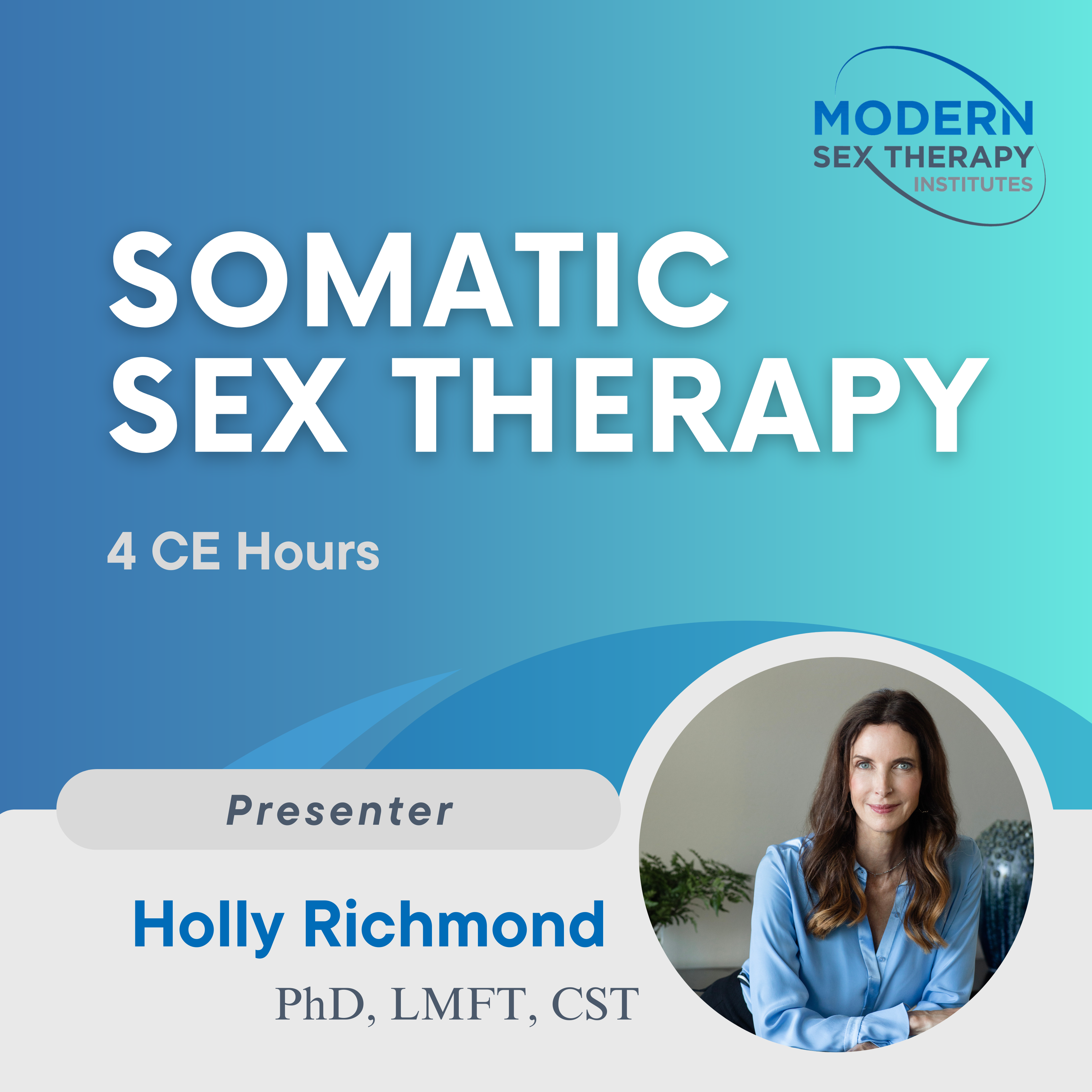
Somatic Sex Therapy (4 CE Hours, 2023)
$160.00
4 CE Hours
Presenter: Holly Richmond, PhD, LMFT, CST
AASECT Category:
Sex Therapy Education, Section A & Section C
Course Description:
Sex is almost always a physical act, so why would we not use the body as a resource for better understanding our clients’ experiences? This course draws on many of the main principles in somatic psychology including polyvagal theory, attachment theory, narrative and art therapy, the Braddock Body Process, integrative trauma and PTSD therapies, and the instructors own research into embodied healing for survivors of sexual trauma. It will address somatic memory and holding, as well as ways to reframe and replace dysfunctional psychosomatic patterns with integrated alternatives.
Understanding how the brain and body work together—not focusing on one over the other—informs effective somatic sex therapy interventions. Somatic techniques are most often used as an addition to, rather than a replace for, traditional sex therapy methodology, and inherently offer titrated pacing and client-lead initiatives. Utilizing somatic sex therapy moves clients toward states of embodiment and empowerment, which creates an ideal foundation for holistic sexual health.
Learning Objectives:
- Understand the principle theories applied to somatic sex therapy
- Describe three clinical examples of how somatic sex therapy can benefit clients
- Explain what is meant by embodiment and empowerment through a somatic sex therapy lens
- Discuss and explain integrated healing and holistic sexual health
Schedule:
30 min: Introductions
1 hr: PowerPoint presentation (with handouts) including somatic psychology theories and methods as applied to sex therapy
15-minute break
30 min: Watch somatic psychology videos and discuss applications for sex therapy
30 min: Two clinical examples with instructor/student dyad with observer discussion
15 min: Break
45 min : Work in triads to discover clinical applications and implications for somatic sex therapy
15 min: Closing comments and Q & A
Speaker Bio:
Related products
-
Finding the Sex You Lost – Transforming limiting beliefsPresenter:Sylvia Rosenfeld, LCSW
$160.00 -
Integrating Kink with Harm Reduction and other Therapeutic Modalities(2 CE Hours)Presenter:Michael Aaron Ph.D.
$80.00 -
Half day or Sunday Workshop (4 hours; 4 CE Hours)
$160.00 -
Treatment of Female Sexual Dysfunction(4 CE Hours)Presenter:Stanley Althof, Ph.D.
$160.00