

Sexual history is one of the most clinically meaningful parts of therapy — and one of the areas many clinicians feel least prepared to explore.
The MSTI Comprehensive Sexual History Intake Guide gives clinicians a structured, inclusive, and clinically grounded framework for opening these conversations with care.
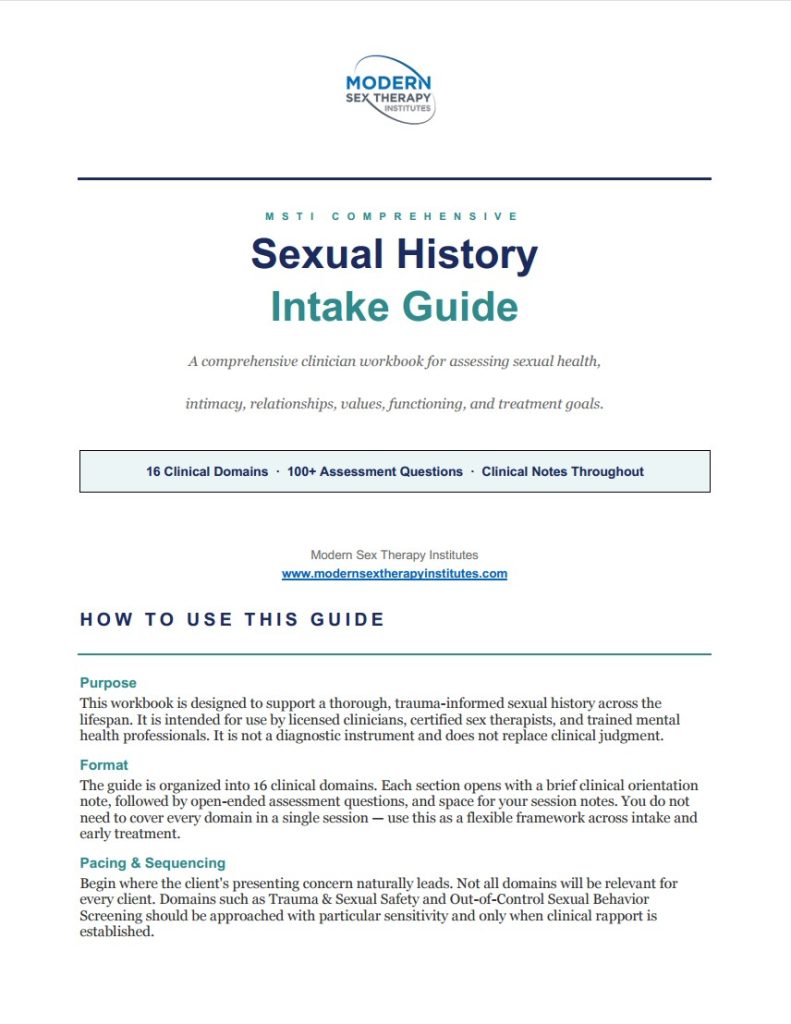
Designed for licensed clinicians, certified sex therapists, and trained mental health professionals, this downloadable workbook supports a thorough sexual history across the lifespan while helping you assess the many factors that shape sexual well-being, intimacy, identity, functioning, and treatment goals.
16 clinical domains covering sexual health, relationships, intimacy, trauma, identity, desire, reproductive experiences, body image, pornography and technology, kink and alternative relationship structures, out-of-control sexual behavior screening, and more.
100+ open-ended assessment questions designed to help clinicians explore client concerns with curiosity, sensitivity, and depth.
Clinical notes throughout to support pacing, sequencing, trauma-informed inquiry, and treatment planning. Also includes dedicated space for session notes so you can use the guide as a practical workbook during intake or early treatment.
A treatment planning summary to help identify key themes, areas for deeper exploration, client strengths, referrals, and next-session direction.
This guide is intended for:
This resource is for trained professionals only and is not intended for direct client distribution.
This is not a checklist of surface-level sex questions. The MSTI Comprehensive Sexual History Intake Guide is designed to help clinicians understand the client’s sexual self in context — including development, identity, shame, desire, pleasure, trauma, culture, relationships, medical factors, resilience, and goals. It invites deeper clinical inquiry while allowing you to move at the client’s pace.
This guide is intended for use by licensed clinicians and trained mental health professionals only. It is not a diagnostic instrument, does not replace clinical judgment, and does not constitute clinical supervision or treatment.