
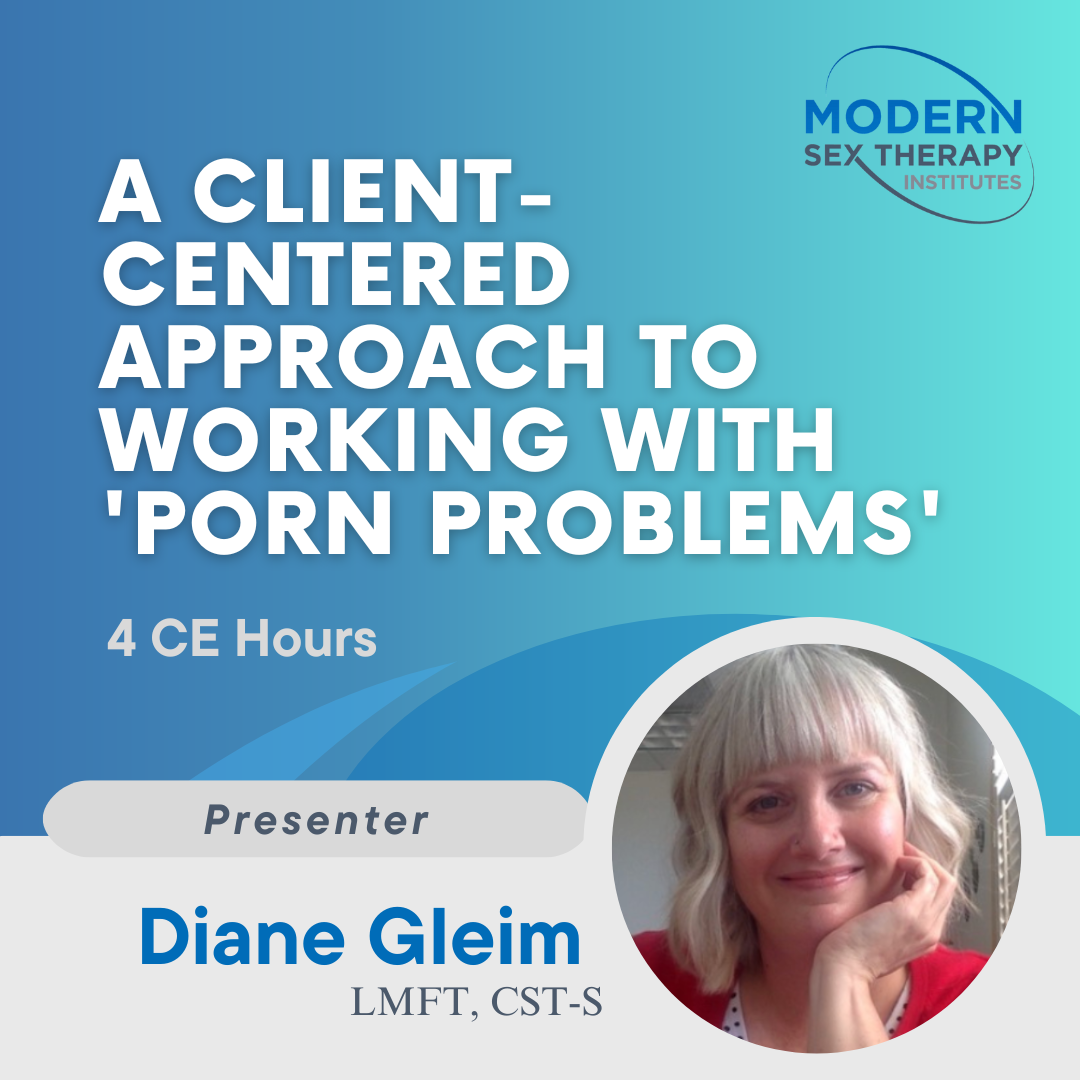
A Client-Centered Approach to Working with ‘Porn Problems’ 4 CE Hours
$160.00
4 CE Hours
Presenter: Diane Gleim
Recorded workshop available via video on demand
AASECT Category: Sex Therapy, Section A
In the 21st century, pornography has become the lightning rod where sexuality, technology, and morality all collide. As a result, it is a confusing subject for most, including the mental health profession. Our profession marginalizes sex: there is and has been a profound erotophobia across the field for generations. Furthermore, it has been difficult for our profession to see the role morality plays in our understanding and treatment of human sexuality issues. Current research shows that therapist training in sexuality is often limited in scope and depth and this directly impacts a clinician’s comfort and competence in working with any sexual issue. Without critical thinking and additional specialized training, therapists can default to sex-negative, pop culture-informed, or traditional gendered stereotypes about all things sex. This of course includes ideas about pornography. The thoughtful therapist is aware of this but may not know what else to think, where to turn for more information, or how else to help their clients when pornography is the stated problem.
In this four hour intermediate-level course, attendees will first get a primer on porn literacy – a new way to conceptualize and relate to pornography without pathologizing or shaming. Recent research about pornography viewers and a client-centered perspective on pornography will be also presented. Attendees may find their previous assumptions challenged and their biases identified. Then, attendees will learn tools for their sex-positive toolkit to help both individuals and couples when pornography is causing conflict.
Learning Objectives:
- Compare the different elements regarding what pornography is, is not, can be, and is ambiguous about.
- Identify four factors that make a client vulnerable to pornography issues. 3. Describe the difference between an intrapersonal conflict and interpersonal conflict when it comes to porn.
- Apply two interventions to help clients with pornography issues.
Activity Schedule
1 hr and 55 minutes:
- Porn Literacy – what it is, what it isn’t, what it can be, what it is ambiguous about 2. Research
- Participant self-reflection
1 hr and 55 minutes:
- Vulnerabilities that can make a client prone to having issues with pornography
- Common presentations (individuals, couples) in therapy surrounding pornography
- Assessment and interventions to help individuals and couples
Speaker Bio:
Diane Gleim is a Licensed Marriage and Family Therapist and AASECT Certified Sex Therapist and Supervisor practicing in Santa Rosa, California. As the first Certified Sex Therapist in Sonoma County, Diane treats the many diverse issues related to sexual identity, sexual expression, sexual behavior, and sexual relationships. Her clients include everyone with a sexual concern: individuals and couples ages 18-80+, and the LGBTQ+, kinky, and poly populations. In addition to her private practice, Diane’s work also includes speaking at mental health and medical organizations on a variety of topics related to sex and therapy; providing consultations to therapists on their challenging sexuality-related cases; being a CAMFT-approved CE provider; writing the blog Underneath the Sheets on Psychology Today’s website, and supervising sex-therapists-in-training as the only AASECT Certified Sex Therapist Supervisor in Sonoma County. She has been quoted in The Press Democrat, Sonoma Magazine, The Buzz by Pure Romance, Quartz, MEL Magazine, CNN.com, and a guest on podcasts. Diane has been voted Sonoma County’s Best Sex Therapist by the readers of the North Bay Bohemian four times.
Class originally recorded: 11/19/2022.
Social workers completing this course receive 4 clinical continuing education credits.