Recorded workshop available via video on demand
AASECT Category: Human Sexuality, Section D.

$80.00
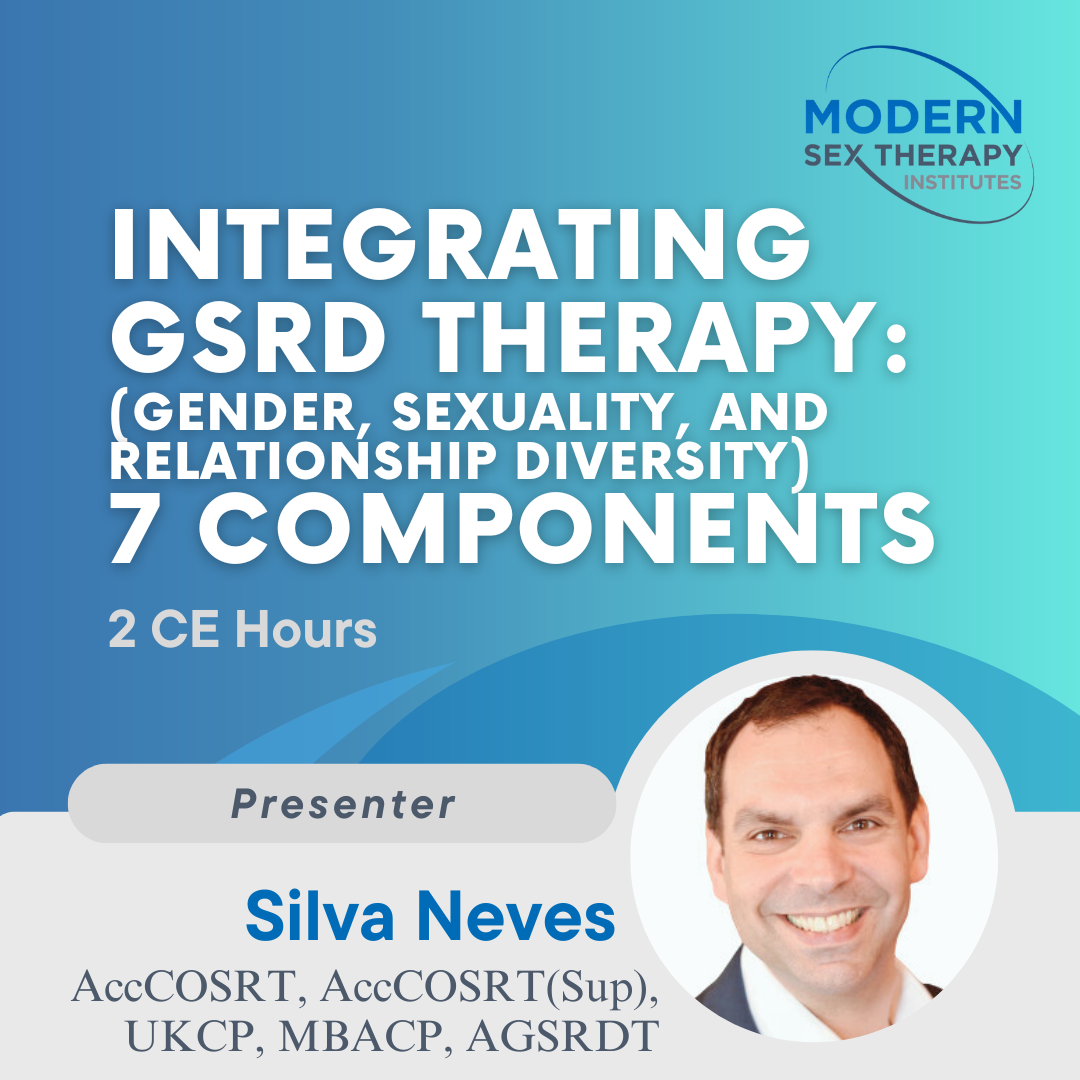
Presented by: Silva Neves, AccCOSRT, AccCOSRT(Sup), UKCP, MNCS(Accred), MBACP, AGSRDT
2 CE Hours
Recorded workshop available via video on demand
AASECT Category: Human Sexuality, Section D.
Description:
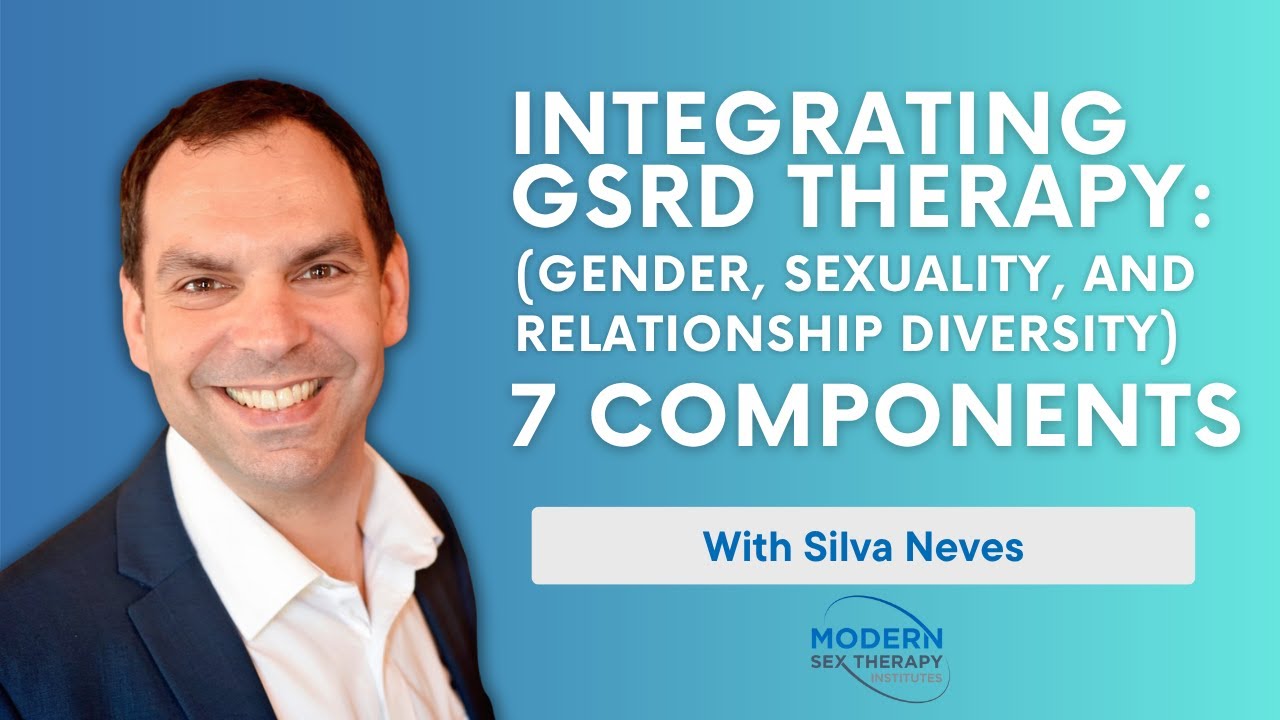
This two-hour lecture will present some of the common heteronormative assumptions that the public and clinicians believe. These assumptions are often unquestioned because they are embedded in our society and most of our clinical training. The lecture will provide information on various gender, sexuality, erotic, and relational diversities that are outside of heteronormativity and other “norms”. Silva Neves will discuss the seven components of GSRD therapy and how to integrate them in existing clinical practice.
Learning Objectives:
Activity Schedule:
0:00–0:15: Introduction and Reflective Framing: Overview of GSRD therapy and individual reflection on early messages about gender, sexuality, eroticism, relationships, and “normality.”
0:15–0:45: Understanding GSRD Diversity: Review of diverse gender identities, sexual orientations, erotic orientations, and relationship structures outside dominant heteronormative frameworks.
0:45–1:15: Identifying Normative Assumptions and Their Clinical Impact: Discussion of heteronormativity, cisnormativity, mononormativity, amatonormativity, minority stress, stigma, and oppression in society and clinical settings.
1:15–1:45: Integrating the Seven Components of GSRD Therapy: Presentation of GSRD-informed theories, “outside the box” clinical practices, and affirming approaches to assessment and treatment.
1:45–2:00: Clinical Application and Closing Reflection: Brief reflection on participants’ learning edges and next steps for GSRD-affirming practice.
Speaker Bio:
Silva Neves is an award-winning, COSRT-accredited and UKCP-registered psychosexual and relationship psychotherapist, and a trauma psychotherapist based in London. He is a Pink Therapy Clinical Associate.
Silva is a member of the editorial board for the leading international journal Sexual and Relationship Therapy.
Silva is the author of three books: Compulsive Sexual Behaviours, A Psycho-Sexual Treatment Guide for Clinicians (Routledge), Sexology: The Basics (Routledge), Sexual Diversity (Karnac), he co-edited three textbooks: Erotically Queer (Routledge), Relationally Queer (Routledge) and Gender, Sex and Relationship Diversity Therapy (Routledge). He also edited The Routledge International Handbook of Sexual Compulsivity and Clinical Sexology (Routledge).
He also contributed chapters in various publications including: The Handbook of Social Justice in Psychological Therapies, Queering Gestalt Therapy, The SAGE Handbook of Counselling & Psychotherapy, Sexual Minorities and Mental Health: Current perspectives and New Directions.
Silva wrote several articles in psychotherapy magazines and peer-reviewed journals, including New Psychotherapist, Therapy Today, Sexual and Relationship Therapy, The European Journal of Psychotherapy & Counselling.
He speaks internationally.
Class originally recorded: 5/15/2026
Social workers completing this course receive 2 clinical continuing education credits.
MSTI is an approved CE organizational provider for IBOSP, AASECT, and ASWB. Modern Sex Therapy Institutes is part of the Advanced Mental Health Training Institute. The Advanced Mental Health Training Institute has been approved by NBCC as an Approved Continuing Education Provider, ACEP No.6901. Programs that do not qualify for NBCC credit are clearly identified. The Advanced Mental Health Training Institute is solely responsible for all aspects of the programs.
MSTI is approved by the American Psychological Association to sponsor continuing education for Psychologists. The Modern Sex Therapy Institutes maintains responsibility for this program and its content.
Modern Sex Therapy Institutes (MSTI), provider #1787, is approved to offer social work continuing education by the Association of Social Work Boards (ASWB) Approved Continuing Education (ACE) program. Regulatory boards are the final authority on courses accepted for continuing education credit. ACE provider approval period: [1/7/22-1/7/26].
Attendees must attend the entire course and complete a course evaluation to be eligible for CE credit
For Live Courses: To obtain CE credits, attendees must attend the entire course and complete an evaluation to receive credit.
For asynchronous/recorded courses, Attendees must pass the multiple choice posttest with a minimum score of 80% in 3 attempts to be eligible for CE credit.
Certificates of completion can be downloaded immediately upon course completion.