
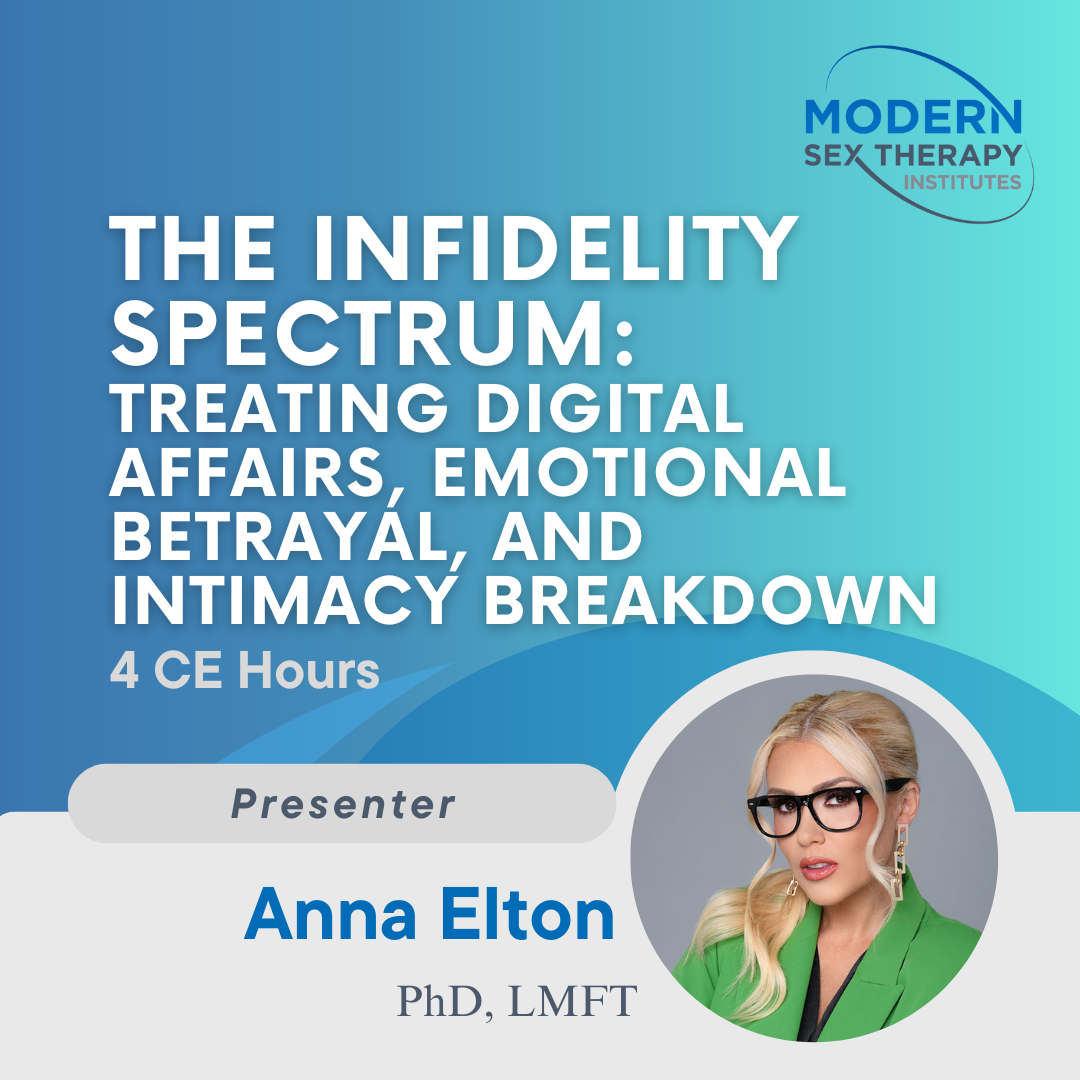
The Infidelity Spectrum: Treating Digital Affairs, Emotional Betrayal, and Intimacy Breakdown (4 CE Hours)
$160.00
Presented by: Anna Elton, Ph.D., LMFT
4 CE Hours
Saturday, August 15, 2026 | 2PM – 6PM EST
Live via Webinar (Zoom) or Available on demand via recording
AASECT Category: Human Sexuality Education, Section K
Description
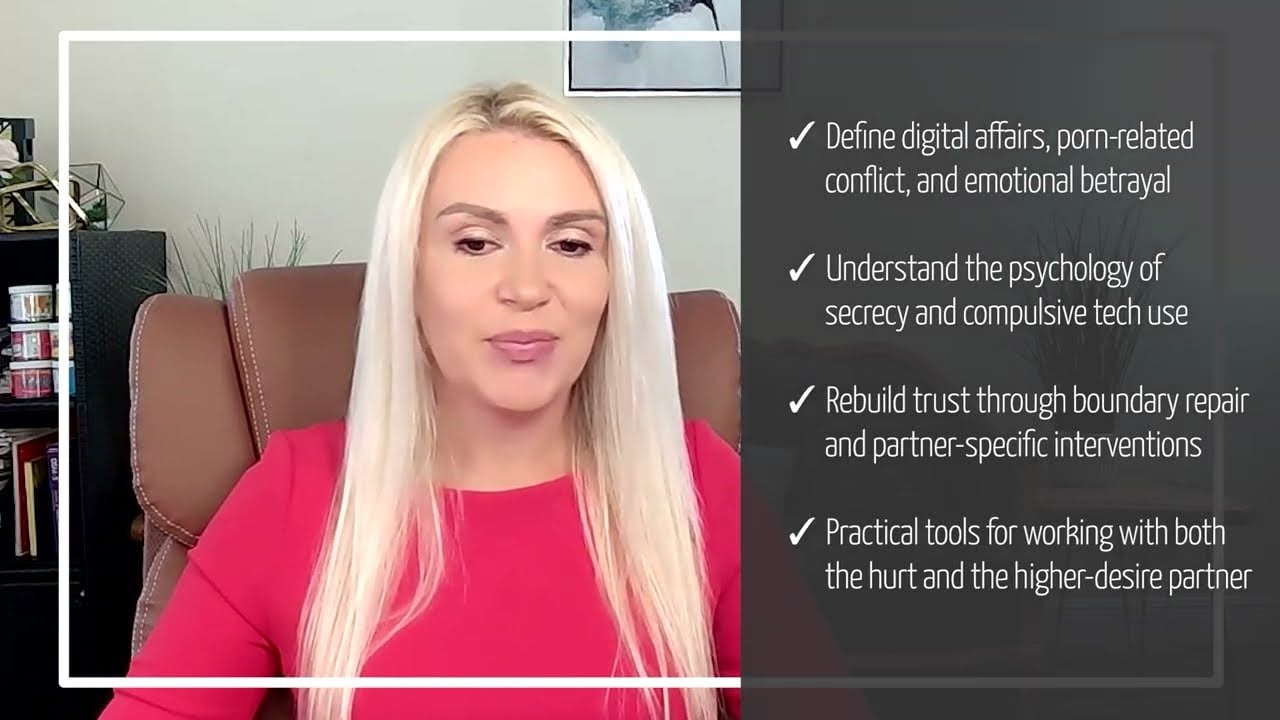
This webinar explores how technology reshapes intimacy and expands the definition of infidelity. From secretive messaging and pornography to emotional affairs and compulsive digital use, clinicians will learn how to assess the spectrum of digital betrayal, understand its psychological underpinnings, and implement boundary-based communication strategies to restore trust and connection.
Learning Objectives
- Define key forms of digital infidelity and compulsive technology use in intimate relationships.
- Identify clinical indicators of intimacy disruption related to digital behaviors.
- Describe psychological mechanisms underlying digital addiction and emotional disengagement.
- Apply therapeutic strategies to rebuild trust, establish boundaries, and promote reconnection.
Speaker Bio
Anna Elton, PhD, LMFT is a licensed marriage and family therapist, certified sex therapist, and clinical sexologist specializing in intimacy, infidelity, and the impact of technology on modern relationships. She is the author of the upcoming books The Formula of Desire and Couples Therapy in the Digital Age. Dr. Elton is the host of Life, Love, Etc., a nationally streamed relationship show, and a contributing writer for Psychology Today, where she explores themes of emotional connection and relational repair. Her work has been featured on PBS, ABC, NBC, and FOX.
Activity Schedule
I. Redefining Infidelity in the Digital Age (45 minutes)
• Emotional, virtual, parasocial, and interactive infidelity
• The Infidelity Spectrum: from curiosity to compulsion
• Exploring values, expectations, and ambiguous violations
• Cultural shifts and tech-enabled secrecy
II. Psychological Drivers of Digital Infidelity (45 minutes)
• Neurobiology of tech compulsion
• Attachment and displacement
• Emotional disconnection vs. erotic drift
• Technology as validation, fantasy, control
• Case vignette
Break (15 minutes)
III. Communication Breakdown and the Role of Secrecy (45 minutes)
• Digital secrecy and avoidance
• Miscommunication loops
• The “Meaning vs. Message” repair tool
IV. Boundary Restoration and Repair Strategies (60 minutes)
• Setting healthy digital boundaries
• Agreements around tech use
• Erotic vs. emotional safety boundaries
• The Digital Boundaries Dialogue
• Rituals and reconnection
V. Clinical Tools and Case Integration (30 minutes)
• Infidelity Impact Mapping
• Disclosure Decision Tree
• Erotic Repair vs. Emotional Closure
• Partner-specific interventions
• Case vignette
Q&A (15 minutes)
Class originally recorded: 8/16/2025.
Social workers completing this course receive 4 clinical continuing education credits.