
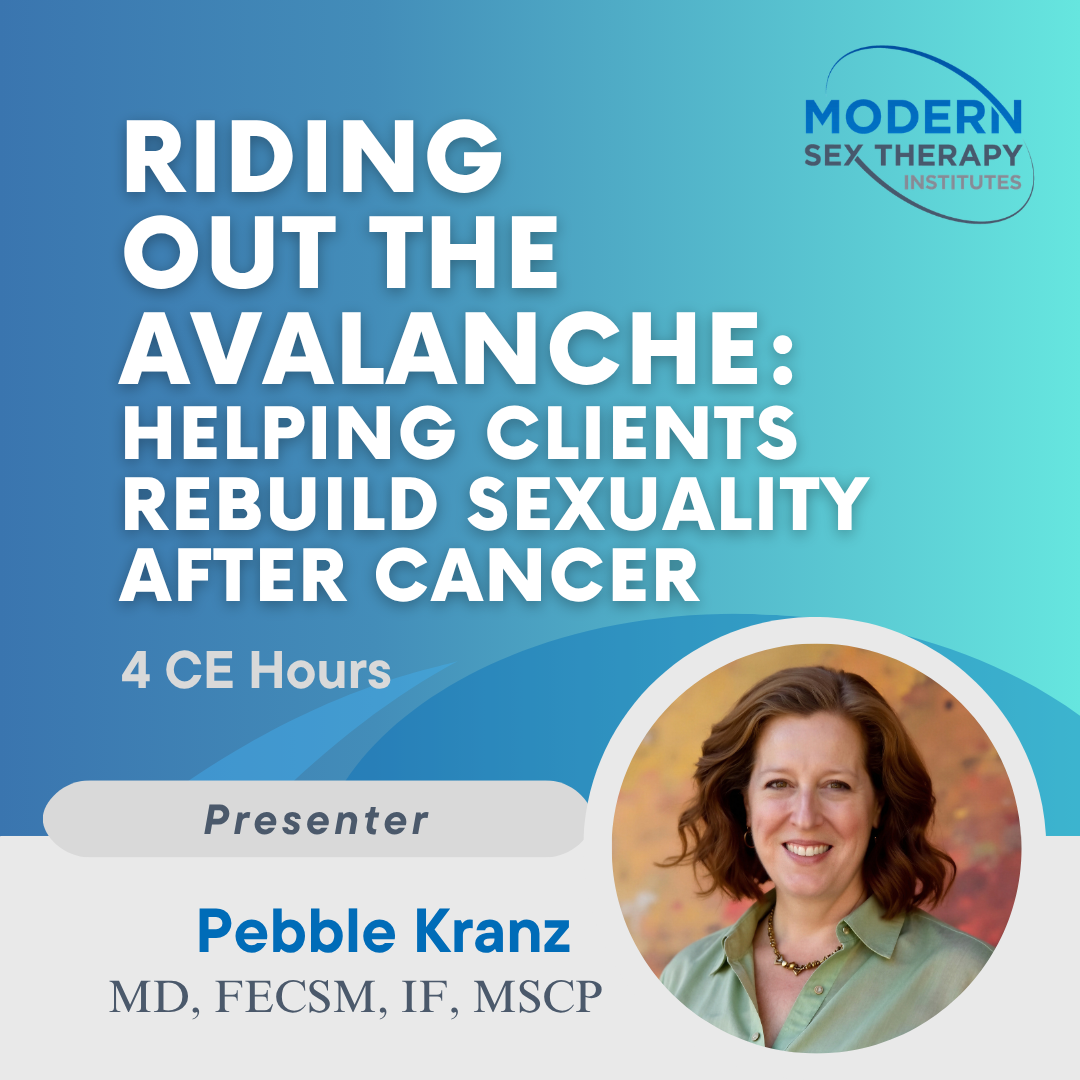
Riding Out the Avalanche: Helping Clients Rebuild Sexuality After Cancer
$160.00
Presented By: Pebble Kranz, MD, FECSM, IF, MSCP
4 CE Hours
Friday, December 11, 2026 | 9AM – 1PM EST
Live via Webinar (Zoom) or Available on demand via recording following the live event
AASECT Category: Human Sexuality, Section H and Sex Therapy, Section D.
Course Description:
Cancer can create a substantial sexual and relational disruption for patients and partners, affecting desire, arousal, orgasm, sensation, body image, and the capacity to adapt to a changed body. This 4-hour didactic seminar examines the impact of cancer and cancer treatment on sexual function through a clinically grounded, biopsychosocial lens, with emphasis on treatment effects, common sexual concerns, and evidence-informed strategies for helping clients navigate sexual recovery.
The course begins with the immediate impact of cancer as a sudden and destabilizing event, then moves through the sexual, relational, and developmental consequences that can follow. The final portion of the session focuses on rebuilding, including guideline-informed interventions, referral pathways, and clinical strategies that support a more flexible and realistic sexual recovery process.
Learning Objectives:
By the end of this training, participants will be able to:
1. Describe the prevalence and clinical significance of sexual concerns among cancer survivors.
2. Explain how cancer and common cancer treatments can affect sexual function and relationships.
3. Identify major sexual and relational challenges that may emerge during and after cancer treatment.
4. Recognize the impact of cancer on both patients and partners.
5. Describe evidence-informed clinical strategies for supporting sexual recovery after cancer.
6. Identify resources and referral pathways for clients with cancer-related sexual concerns.
Activity Schedule:
1. Introduction and overview
– Welcome, opening frame, and course objectives.
– Why cancer and sexuality matters clinically.
2. The avalanche of cancer
– Population trends and current relevance.
– Cancer as an often sudden disruptive event for patients and partners.
– Overview of cancer treatments and broad sexual effects.
– Current gaps in sexual health communication in oncology care.
3. Pathophysiology and sexual impact
– Treatment-related and illness-related changes.
– Sexual and relational morbidity, including changes in arousal, sensation, orgasm, desire, fatigue, body relationship, identity, grief, and life plan shifts.
– Clinical implications for assessment and support.
4. Rebuilding after cancer
– Navigating a changed sexual landscape.
– Clinical strategies for arousal, orgasm, desire, and sensation concerns.
– Supporting grief, adjustment, and rediscovery of pleasure in the body after cancer.
5. Conclusion
– Summary and review of key takeaways.
– Questions and discussion.
Speaker Bio:
Pebble Kranz, MD, FECSM, IF, MSCP, a family physician, menopause medicine, and sexual medicine specialist, graduated from Brown University’s Medical School in 2007 and completed residency with the University of Rochester Family Medicine Residency Program in 2011 with a focus on psychosocial aspects of primary care. After serving as residency faculty and a primary care doctor for the University of Rochester, Dr. Kranz pursued additional training in sexual, menopause, and gender medicine, earning fellowships from the European Committee on Sexual Medicine, the International Society for the Study of Women’s Sexual Health, certification from the Menopause Society as a menopause medicine practitioner, as well as status as an Advanced Practitioner in Optimal Sexual Experiences Group Couples Therapy. She has served on the board of the Scientific Network on Female Sexual Health and Cancer and is a consultant to the University of Rochester’s Pluta Breast Center’s Sexual Wellness Clinic. She is founder and medical director for The Rochester Center for Sexual Wellness, providing comprehensive care for sexual, relational, and gender concerns in Western New York. Dr. Kranz is committed to educating healthcare professionals at all levels and the community on medical care for sexual concerns.
Class originally recorded: upcoming
Social workers completing this course receive 4 clinical continuing education credits.